Sourcing Mazda RX-3 Parts: A Practical Guide for Rotary Enthusiasts
Owning a Mazda RX-3 is a rewarding experience, but keeping one on the road takes dedication. These cars are rare enough that walking into a general auto parts store and asking for a new intake manifold or a set of apex seals will get you a blank stare. The Mazda RX-3 is a unique piece of automotive history, and finding the components to maintain or restore one requires a different approach than your average classic car project.
If you are new to the world of these old-school rotary machines, the first thing to understand is that the Mazda RX-3 shares some DNA with its siblings, but not everything is interchangeable. The 12A engine found in most RX-3s is a single-rotor motor in the early models, though later versions received a two-rotor 12A. This can cause confusion when you start looking at parts for the 13B engine that powers the later RX-7. Knowing exactly what you have under the bonnet saves time and money. At the same time, the used parts market for these vehicles is a different beast to buying new stock for a modern car.
Understanding the Rotary Core
The heart of any Mazda rotary is the engine itself, and for the Mazda RX-3, that usually means the 12A engine. This powerplant has a reputation for being smoother than a piston engine of similar output, but it has its own set of wear points. The rotor housing, for example, can develop wear at the top dead centre position if the engine has been run hard or neglected. When you are hunting for Mazda RX-3 parts, the condition of the rotor housing is one of the first things to check. A pitted or deeply scored housing can often be salvaged with a reconditioned engine core, but finding a clean original housing is becoming harder every year.
The apex seal and side seal are the next critical components. These are the parts that take the brunt of the combustion pressure, and they wear out over time. A failing apex seal will rob the engine of compression and cause hard starting. If you are sourcing used parts, be cautious about buying a set of seals that are still installed in a rotor housing that you cannot inspect. It is often better to buy a known good used engine or a reconditioned engine from a specialist who has already tested it. The 13B engine, while more common in later models, is a different beast altogether. The housings are wider and the rotors are larger. Dropping a 13B into an RX-3 is a popular modification, but it requires a different set of supporting parts like intake manifolds and exhaust flanges.
Where the Models Diverge
The Mazda RX-3 is part of a family that includes the Mazda RX-2 and the Mazda RX-4, and later the RX-7. While these cars all use rotary engines, the mechanicals are not a straight swap. The Mazda RX-2, for instance, uses a similar 12A engine but the mounting points and the ancillaries like the carburettor and intake manifold are different. The Mazda RX-4 moved to a larger body style and often came with a 13B, so its gearbox and differential are heavier duty. If you are trying to upgrade the driveline in your RX-3, parts from an RX-4 can sometimes be adapted, but it is not a bolt-in job. The driveshaft lengths and spline counts need to match, or you will be fabricating custom pieces.
This is where a specialist wrecker becomes invaluable. A business like Just Rotaries in Melbourne deals exclusively in dismantled rotary-powered Mazdas. They have rows of parts pulled from RX-2s, RX-3s, RX-4s, and RX-7s. If you need a specific differential or a gearbox from a particular year, they are the kind of place that can tell you the difference between a 1973 and a 1975 unit. They stock used parts that have been inspected, cleaned, and sorted. That is a huge advantage over buying a whole car sight unseen or trusting an online listing that says "fits RX-3" when it might actually be from an RX-4 with different mounting ears.
Common Wear Items and Replacements
Beyond the major engine components, there are several smaller items that frequently need attention on an older Mazda RX-3. The spark plugs are a regular maintenance item, and they are still available new from aftermarket suppliers. But if you are looking for the original equipment plugs or a specific heat range that is no longer manufactured, you might need to scavenge from a used parts stash. The same goes for the carburettor. The RX-3 used a four-barrel carburettor that can develop vacuum leaks or worn throttle shafts over decades of use. A rebuild kit is one option, but finding a clean used carburettor that has not been sitting with ethanol fuel crusting the passages is often the quicker path.
The intake manifold is another part that sees a lot of thermal cycling. Cracks can form around the mounting flanges, especially if someone has over-tightened the bolts. A used intake manifold from a wrecker can be a good replacement, but you want to check that the mating surface is flat. A warped manifold will cause vacuum leaks that are hard to diagnose. Similarly, the exhaust manifold and the heat exchanger for the oil cooling system are prone to rust if the car has been stored in a damp environment. A specialist like Just Rotaries in Melbourne will have pulled these parts from cars that have been kept in dry sheds, which makes a difference in the quality of the metal.
Driveline Considerations
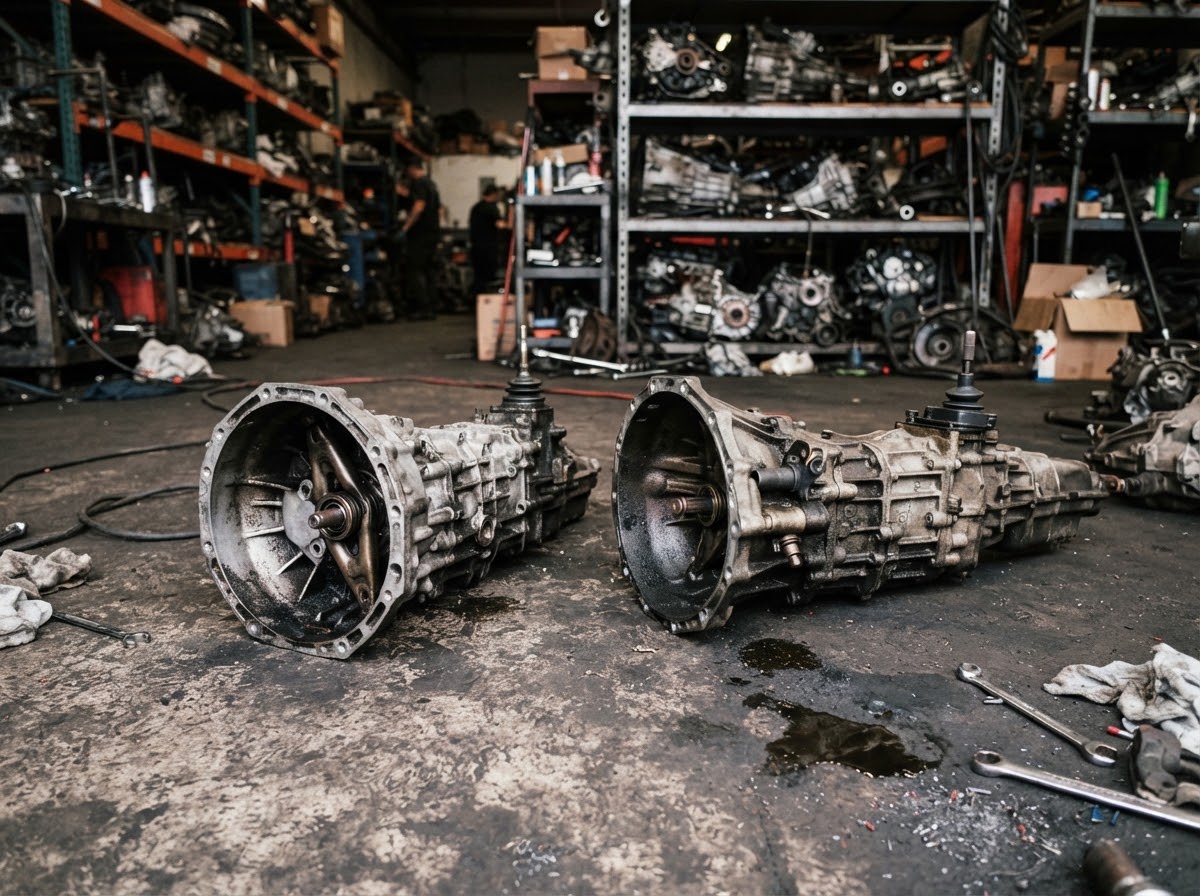
The gearbox in the Mazda RX-3 is robust for its era, but the synchros can wear and the shift forks can bend over time. Finding a used gearbox that shifts cleanly is a matter of luck unless you are dealing with someone who tests them before selling. The same applies to the differential. The RX-3 uses a solid rear axle, and the differential housing can develop leaks at the pinion seal. If you are rebuilding the rear end, you might need shims and bearings that are specific to that model. The driveshaft itself is usually fine unless the universal joints are worn, but the splines on the differential input can strip if the car has been driven with a loose bolt.
When you are sourcing Mazda RX-3 parts, it pays to ask detailed questions. If you are buying a gearbox, ask whether it came from a car that was driven into the yard or if it was pulled from a car that had engine failure. A gearbox from a car that was daily driven until the engine gave out is likely in better shape than one from a car that was left to rot. The same logic applies to the differential and the driveshaft. A reconditioned engine is always the safest bet for the heart of the car, but for the driveline, a used part from a reliable source can give you many more years of service if you inspect it properly.
Practical Advice for the DIY Owner
If you are doing the work yourself, set up a workspace where you can lay out parts and label everything. Rotary engines have a specific order of assembly, and mixing up the rotors or the housings from different engines can cause balance issues. When you buy a used set of components like a rotor housing and a set of side seals, check that the seals are the correct thickness for that housing. There were running changes in the 12A engine over the years, and a seal from a 1974 engine may not fit a 1976 housing correctly.
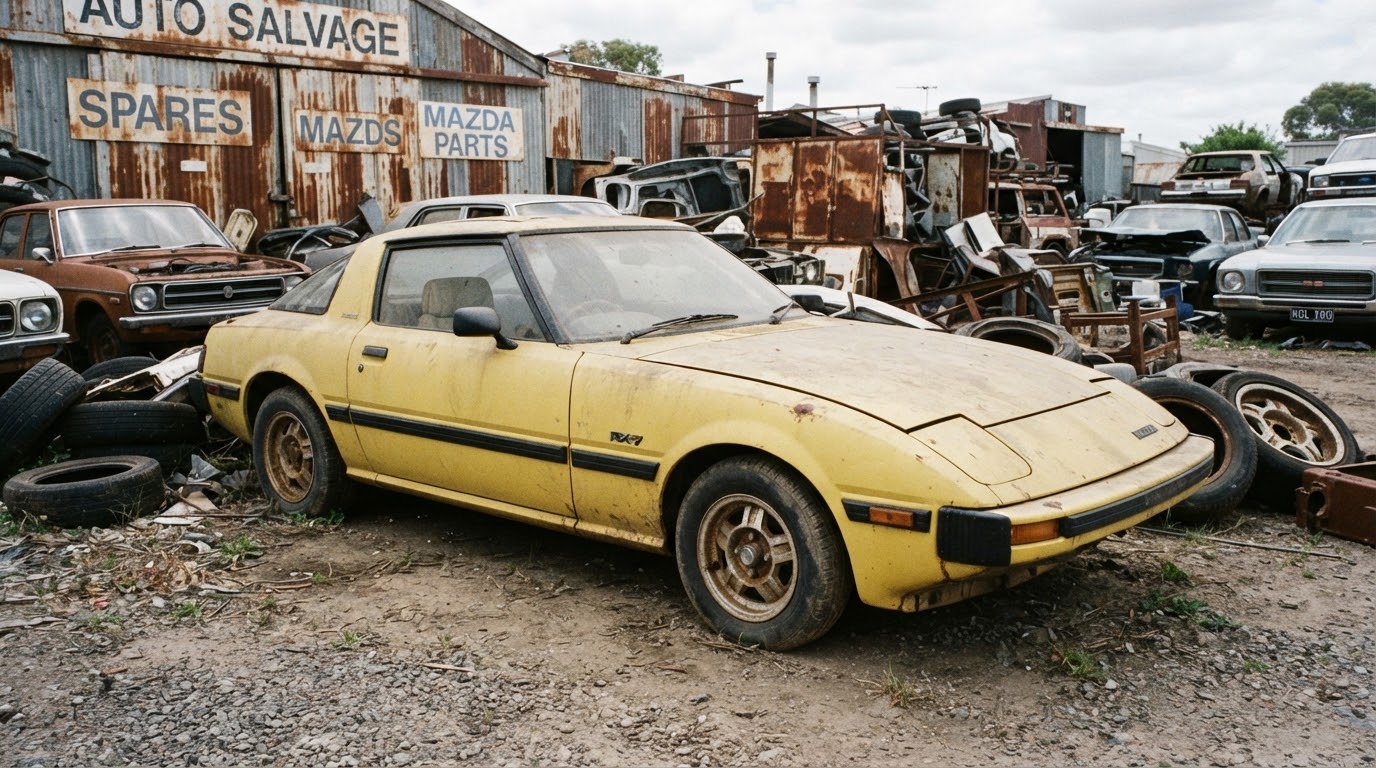
One of the biggest mistakes new owners make is buying a whole car for parts without knowing what they are getting. A complete Mazda RX-3 that is a non-runner can look like a goldmine, but if the engine is seized and the gearbox is full of water, you have just bought a pile of scrap. It is almost always cheaper to buy the specific Mazda RX-3 parts you need from a wrecker who has already done the sorting. The cost of shipping a heavy item like a differential or a gearbox is far less than the cost of hauling away a whole car that turns out to be useless.
Another practical tip: keep an eye on the small brackets and bolts. Many of these are no longer available new, and a missing bracket for the carburettor linkage or a snapped bolt on the intake manifold can stop a restoration dead. When you order a set of used parts, ask if the seller can include the original hardware. A good wrecker will bag the bolts with the part so you do not have to hunt for metric thread pitch that has not been common since the 1980s.
The Value of a Specialist
Businesses like Just Rotaries in Melbourne fill a specific niche. They are not a general auto parts store and they are not a chain. They deal almost exclusively in rotary-powered Mazdas, so they know the quirks of the Mazda RX-3, the Mazda RX-2, and the later RX-7. They have dismantled enough of these cars to know that the rotor housing from a 1974 RX-3 is not the same as the rotor housing from a 1977 model, even though they look similar. They also stock used parts that have been pulled from cars that were running when they arrived, which is a level of verification you cannot get from a random classified ad.
If you are in Australia, or willing to pay for shipping, a specialist wrecker is often the fastest way to get a 12A engine core or a set of apex seals. They can also tell you if a part is likely to need rebuilding before you install it. That kind of knowledge saves you from the frustration of bolting on a used carburettor only to find it has a cracked base plate. It also means you can buy a reconditioned engine with confidence, knowing it has been built by someone who works on these engines every day.
At the end of the day, keeping an Mazda RX-3 on the road is about knowing where to look and who to ask. The parts are out there, but they are not sitting on a shelf at the local auto shop. They are in the hands of specialists and collectors who understand the value of a good rotor housing or a set of side seals. If you treat the search for Mazda RX-3 parts as a treasure hunt rather than a chore, you will enjoy the process a lot more. And when you finally get that engine running and hear the smooth hum of a rotary at idle, you will know it was worth the effort.